We Will Never Be AI Natives
But we can build the first towns
It starts with the term AI native: Those of us who learned to work before AI will never be natives, but neither were the people who founded new countries. This piece is mainly for anyone who learned their trade before AI arrived, and also for anyone who has ever felt uneasy about being an immigrant. It ends with three steps you can start on.
About 6,600 words, 13 images, 27 minutes to read.
Murphy Zhai recently published The Counterintuitive Truth About Being AI-Native on Substack. I had started on something similar a couple of years ago, only about immigration: an essay about what moving to another country does to the way a person sees things. I couldn't get it to work then and never got past the opening. That post sent me back to the draft, and these past few years of living with AI have given me the missing half, so here it is.
I signed up for ChatGPT within its first couple of months and tried putting it to work, though back then it couldn't do much for me. Later the tools could make changes themselves, but it wasn't until the spring of 2026 that I started using command-line coding tools. If using AI is like moving somewhere new, I spent the first few years passing work through a window, and the spring of 2026 was when I moved in.
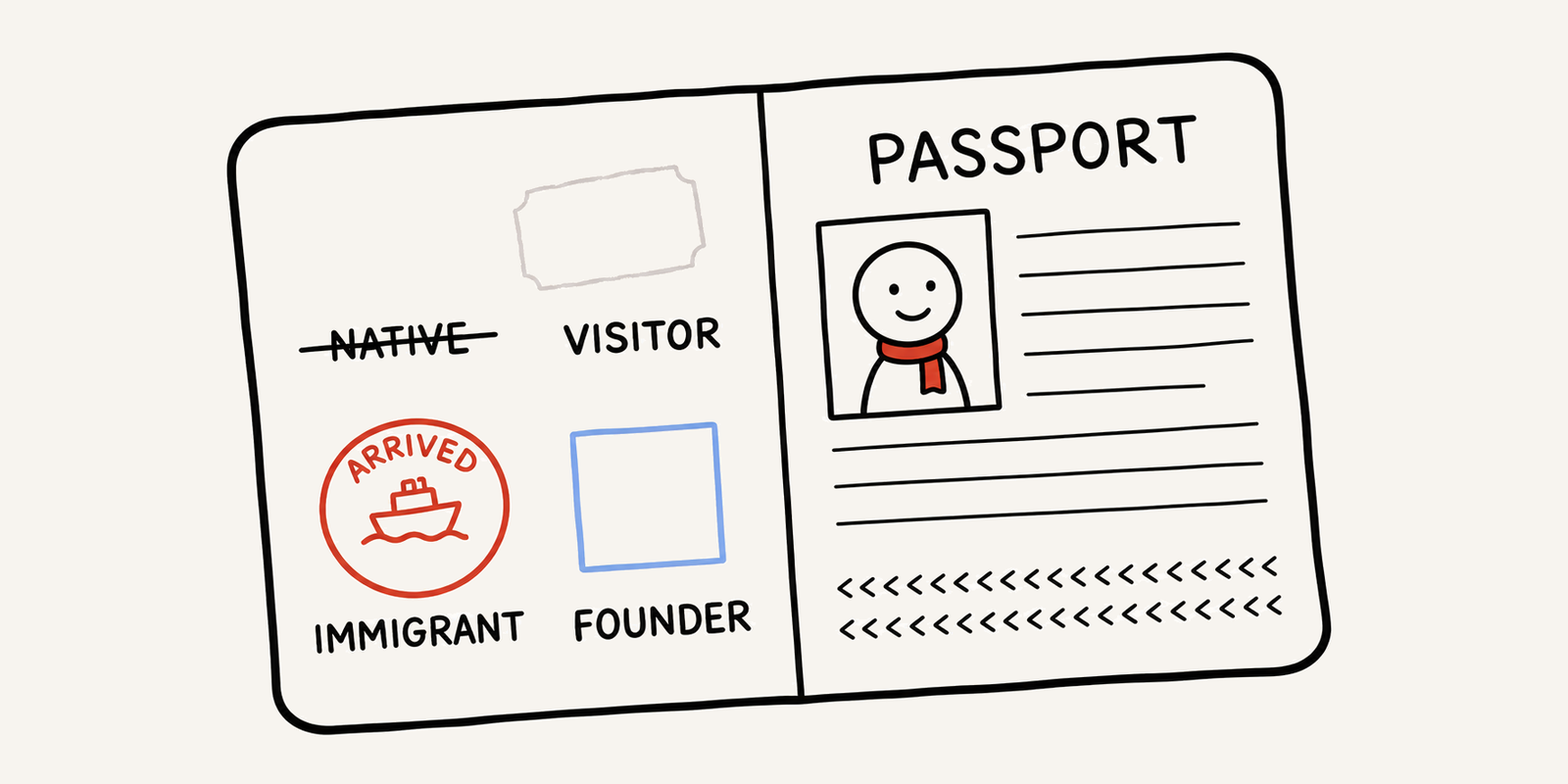
But arriving early is still only arriving. Neither date will ever be a birth certificate. Even if I carry a different passport one day, it will still say where I was born.
Yet AI native is a term you see everywhere now. It sounds natural enough: Some people grow up with AI, others pick it up halfway through life, and the two are probably different.
If you had been working for years before AI came along, and had your own habits down, hearing the term often enough can leave you a little uneasy. Is it too late for me to start? However hard I try, will I ever catch up with people who grew up with it?
In my last post, I wrote that names are made by the people who use them. This one has caught on, I can't make anyone stop saying it, and I'm not trying to correct anybody. I only want to raise one question and try to answer it: What does this name let us see, and what does it leave out?
The word native puts birth first
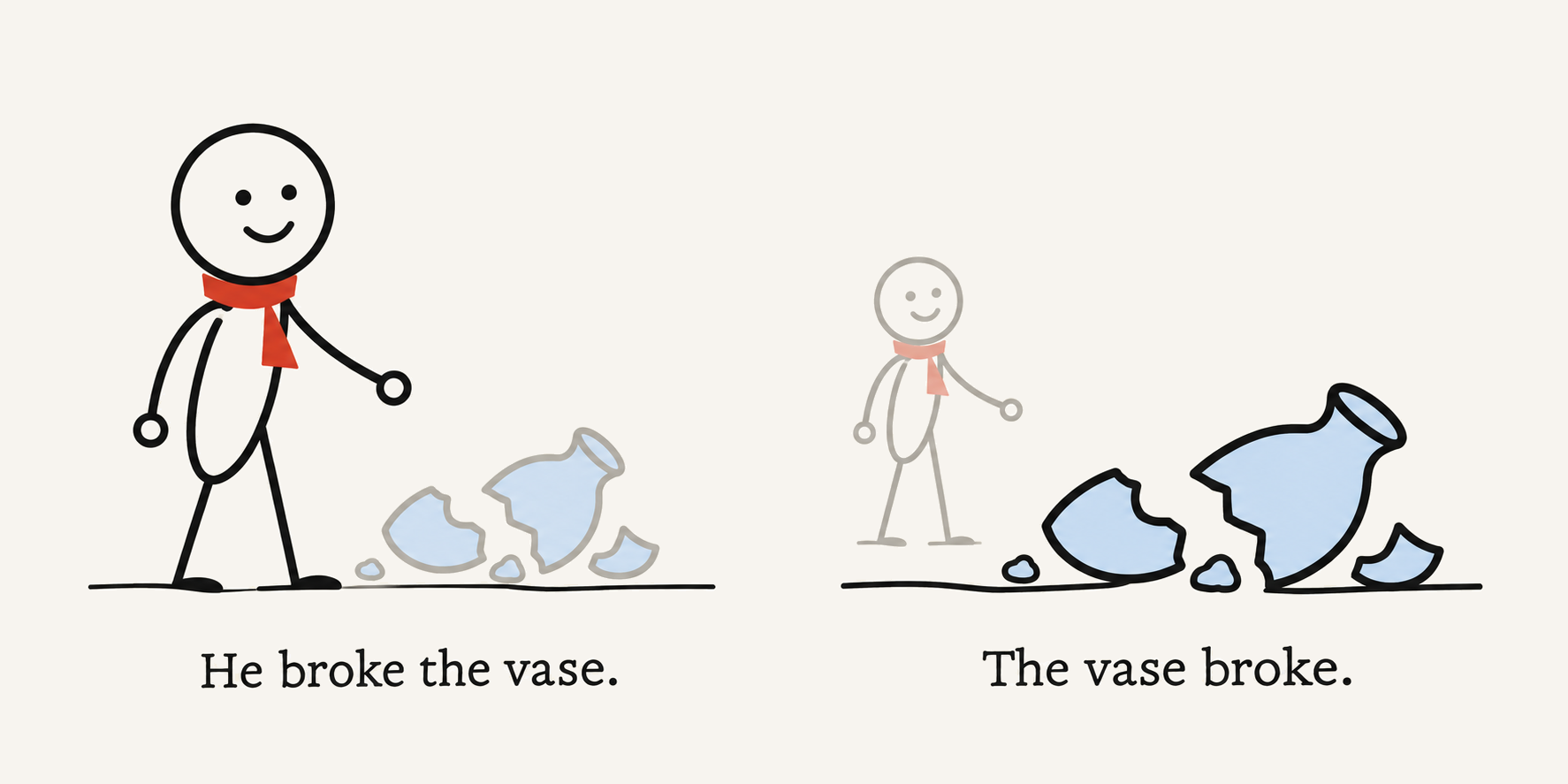
There's a well-known experiment on whether language affects how people think. English and Spanish speakers watched the same videos, half of them showing small accidents. For that kind of event, English tends to say “he broke the vase,” while Spanish more often says something closer to “the vase broke.” Asked afterwards, the English speakers were better at remembering who did it. The events were identical, yet habits of speech changed whom people noticed and remembered.
The philosopher Ludwig Wittgenstein put it more absolutely: “The limits of my language mean the limits of my world.” I wouldn't go that far. A different word doesn't force a different thought, and psychologists have largely dropped the strong version of that idea. But once we're used to a way of saying things, our eyes tend to follow it.
So what does native make visible? Origin. The word puts birth first: Once it is on the table, the first question becomes whether you were born here, not whether you live here now. Whatever you have done since you arrived has to wait its turn.
The metaphor isn't mine. But I moved to Canada as an adult, so words like native and immigrant hit close to home for me. Since we've borrowed the word native, I'd like to follow it a few steps further and not stop at the airport.
1By that measure, we'll always be immigrants
Start with the most literal reading of the metaphor: A native is someone who was born here. However well a newcomer gets to know the place, the day they arrived doesn't change.
In 2001, the American education writer Marc Prensky divided people into digital natives and digital immigrants. People who came to digital technology later, he wrote, learn the new language but keep an accent from the old one. There are “hundreds of examples of the digital immigrant accent,” and his first was printing out your email to read it. That sounds a bit funny today, but a sheet of paper did make people feel surer of what they were reading.
Every big change has its natives and its immigrants
Whether you count from my first sign-up or from the spring of 2026, one thing stays the same: I already had a way of working before AI came along. I remember how the work got done without AI, and I remember having to figure out where to start learning. That is different from growing up assuming this is simply how things are done.
None of this started with AI. Every big change leaves the same two groups behind. There were people who learned a trade by hand before the factories came, people who wrote with a pen before they typed, and people who paid in cash before they paid by card, and then by phone. In China, a lot of people skipped the card step altogether. Each time, those who crossed over remember two ways of doing the same thing, and those born afterwards know only one.
Getting better doesn't change when you arrived
So that is who I mainly mean by we in the title: People who were already working before 2022, or who had already learned one way of doing things and crossed over later. I'm not trying to draw a line by birth year, and I'm not issuing anyone a native's certificate.
In that sense, we will never be AI natives. However good I get, the day I arrived stays where it is. It sounds a little bleak, but once I'd thought it through, I stopped being so hard on myself.
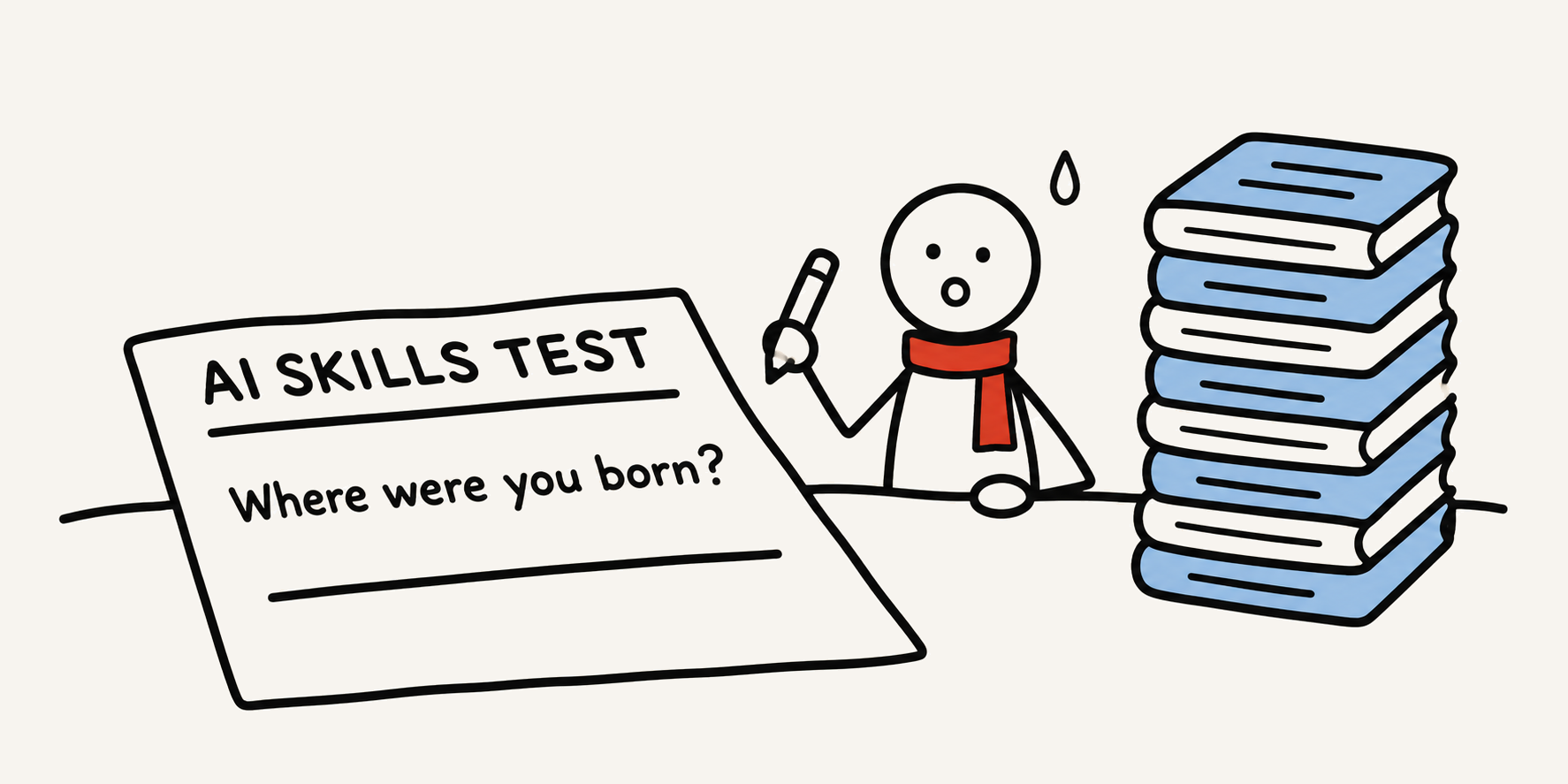
We showed up for a skills test and were handed a question about where we were born. No amount of studying gets that one right.
2Home only appears once you leave
Still, the half of the immigrant comparison I care about more is the other one: People who have left can't go back to being people who never left.
Leaving gives you a second way of seeing
The English writer G. K. Chesterton wrote in Tremendous Trifles that “the whole object of travel is not to set foot on foreign land; it is at last to set foot on one's own country as a foreign land.” I like that line a lot. While you stay in one place, that place is simply life. You eat this way and talk this way, and none of it seems to need explaining. Only when you land somewhere that does things differently does the old life take on an outline. Things I took for granted as a kid turned out to be, oh, just how we did them where I grew up.
So a hometown is more than a point on a map. It's also a way of seeing that only shows up after you leave. That isn't quite the same as being homesick. Someone with no wish to go back can still know exactly what home is, and someone who does go back won't automatically forget life outside. You can go back to the same street, but not to being the person who didn't yet know what was outside it.
And staying in the new place doesn't turn you into someone who was born there. Neither side can hold all of you anymore. Slowly, an immigrant becomes a third kind of person, carrying the old life along with an extra way of seeing.
Wanting the old way back is only natural
Not everyone takes leaving that way. Some people never stop planning the trip back, and for them the years away are a stopover, however long it lasts. AI has people like that too. When something new turns up, their first feeling is that the old way was better, the old craft more solid.
People felt this way long before AI came along. For most of history, in the East and the West alike, authority lived in the past. A claim needed a source, and a change needed a precedent. Common-law courts still settle today's cases by looking for yesterday's rulings, and for some two thousand years in China, a reformer's best argument was often that the ancients had already done it. Europe's great break with the Middle Ages was sold the same way, as a rebirth of the ancient world; that is what Renaissance means. The belief that newer is likely to be better is, on most accounts, the recent one. It took hold with modern science, only a few centuries ago.
You can turn AI off, but not the comparison
So wanting the old way back is only natural, and I feel the pull myself. I just don't think it survives heavy use of AI. Before, when a task came in, doing it yourself from scratch was the most natural thing in the world. Then you find that some parts go better if AI tries first, and some are quicker by hand. The next time the same task turns up, even if you end up doing all of it yourself, there's one more option in your head.
By then, “I'll do it myself” no longer means what it used to. Before, there was no choice. Now it's something you decided after comparing.
Driving works the same way. Someone who learned on a manual gets used to an automatic within days, though for a while the left foot keeps stamping on a clutch that isn't there. Go back to a manual ten years later, and you stall at the first light, because by then the foot has forgotten. The licence is the same one, but the driver isn't.
That is mainly what I mean by not being able to go back. Turning AI off is easy; turning off the comparison in your head is not. We can't become natives here, and we're no longer the people who never left.
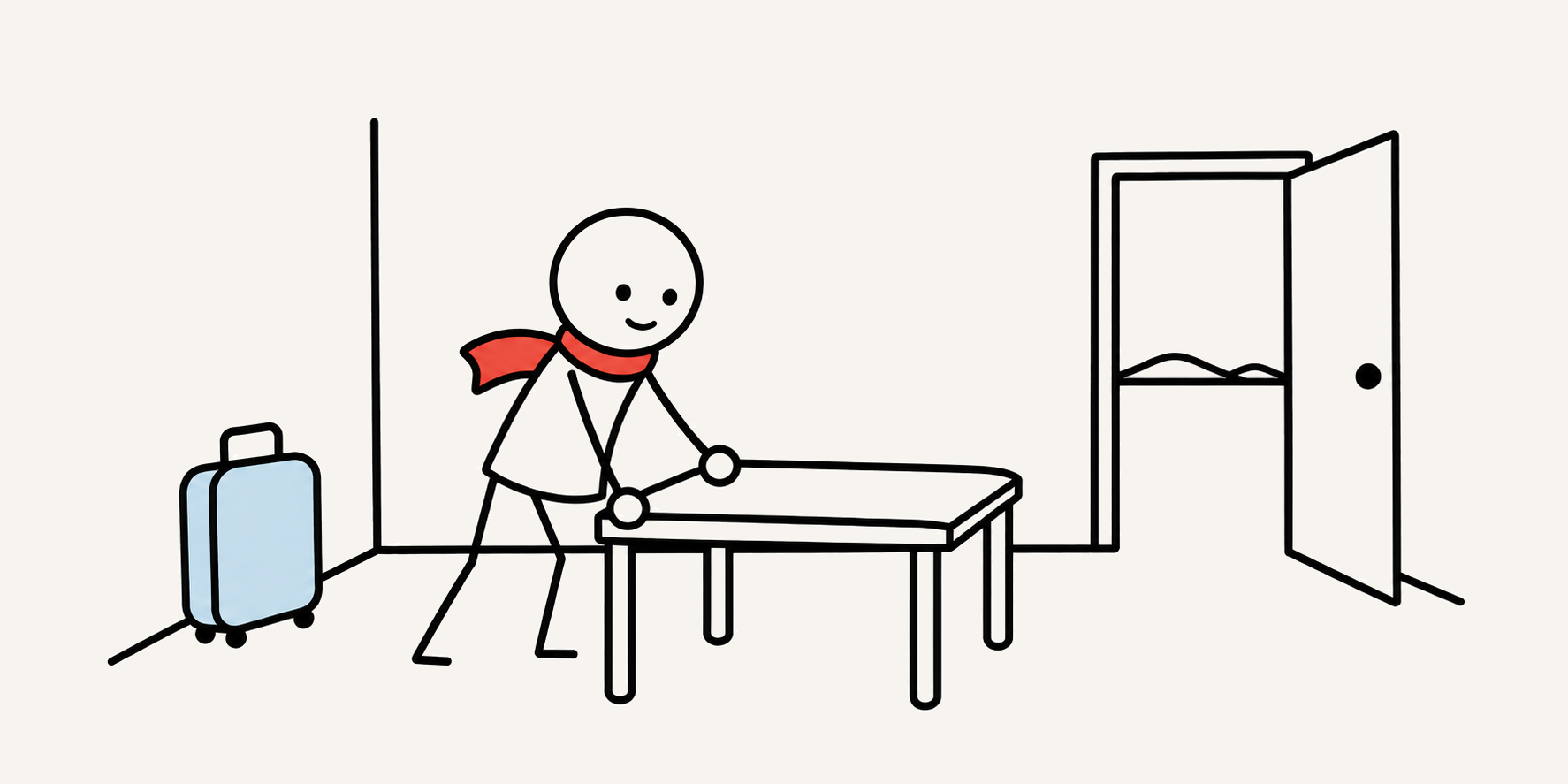
But a third kind of person still has a life to get on with. We can't live out of a suitcase forever, waiting to feel local enough before we unpack.
3The mainland drifts too, and nobody is the original
Immigrants are prone to one illusion: I'm adrift, and everyone else has roots. They were born here, so of course they know what's right, and I'll always be the one catching up.
Roots can grow on a ship
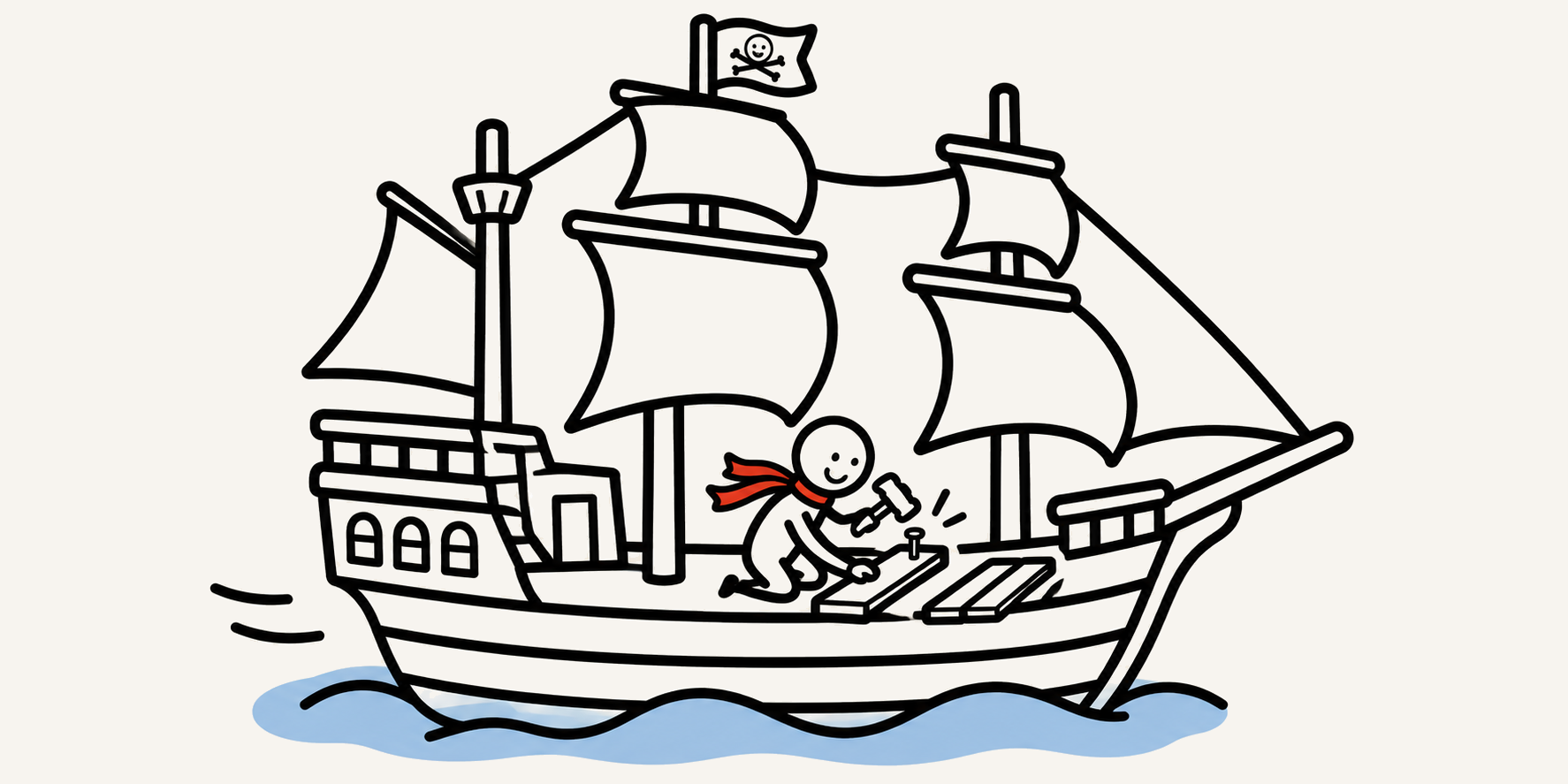
There's a picture I keep coming back to: We live on a pirate ship. The pirates aren't my idea. Startup people have been fond of them since 1983, when Steve Jobs told the Macintosh team, “It's better to be a pirate than join the navy.” What I keep thinking about is the ship. It never stops moving, here today and somewhere else tomorrow. Ask where our roots are, and the answer is on the ship.
That sounds odd. Aren't roots supposed to be in the ground? But if a group of people live on a ship long enough, look out for one another, and have their familiar spots and habits on board, then the ship is their home. Roots can grow on a ship, too. The pianist in the film The Legend of 1900 was found as a baby on an ocean liner and never once stepped ashore. Nomads managed the same thing on land: a whole nation that could be packed up and moved.
Culture and language never hold still
From the deck, the mainland looks steady. The people over there never seem to need to explain where they belong.
But the mainland drifts too. Continental drift never stops; it just moves too slowly for the people standing on it to feel.
Culture is much the same. Being born into one doesn't mean you naturally belong to it. The things that feel solid to us are slowly being replaced as well. One day you look back and find that rules you thought were perfectly normal as a child are rules nobody keeps anymore.
Language change makes this especially easy to see. People like to point out that American English kept the word fall for the season after Britain itself gave it up, as if that made American the more original English. But keeping a few old words isn't the same as keeping a whole language unchanged. Every branch kept some things and changed others. You can't pick out the parts you kept and announce that everyone else's changes don't count.
It's like a species that split into two branches, each going its own way afterwards. Asking which of the two is the original rarely gets you anywhere. Both come from the same place, and both have had a life since.
Even AI natives will have to keep adjusting
So I don't really believe there's a complete, correct original sitting safely somewhere, waiting for everyone who came later to copy it. Everyone is drifting. The rocking is just more obvious on a ship, and people on the mainland hardly feel it.
Even bloodlines, the strictest kind of orthodoxy anyone has come up with, were never as fixed as we picture them. When the ruling line of French kings died out in 1589, the crown went to the Bourbons, a junior branch that had split off three centuries earlier, and before long nobody thought of them as anything but the royal family. Which branch counted as the main one tended to follow which branch was doing well. Strictly speaking, that's a weakness we all share: Everyone loves a winner. We imagine the old rules as stricter and more sacred than they were, mostly because we no longer live under them.
With AI, this is even easier to see. A few months after you've learned a way of working, the tools change and you have to adapt all over again. Growing up with AI won't spare anyone this. What they learn first will go out of date as well.
Seen this way, immigrants aren't the only ones without firm ground under them; the mainland is drifting too. People on a ship at least know they have to watch where they're going.
4An accent is what the old days leave on you
So what exactly is the immigrant accent Prensky was talking about? I think it's the set of habits your old days left on you.
Habits that outlive the thing they were for
In July 2020, a dad posted a TikTok video that made this famous, though he wasn't the first to notice it. In the video, he asks his two kids to pretend they're talking on the phone. A grown-up would stick out a thumb and little finger and hold the hand to one ear, like a handset. The kids hold a flat palm against the ear, like a smartphone. Most homes got rid of the handset years ago, and the adult's gesture hasn't caught up.
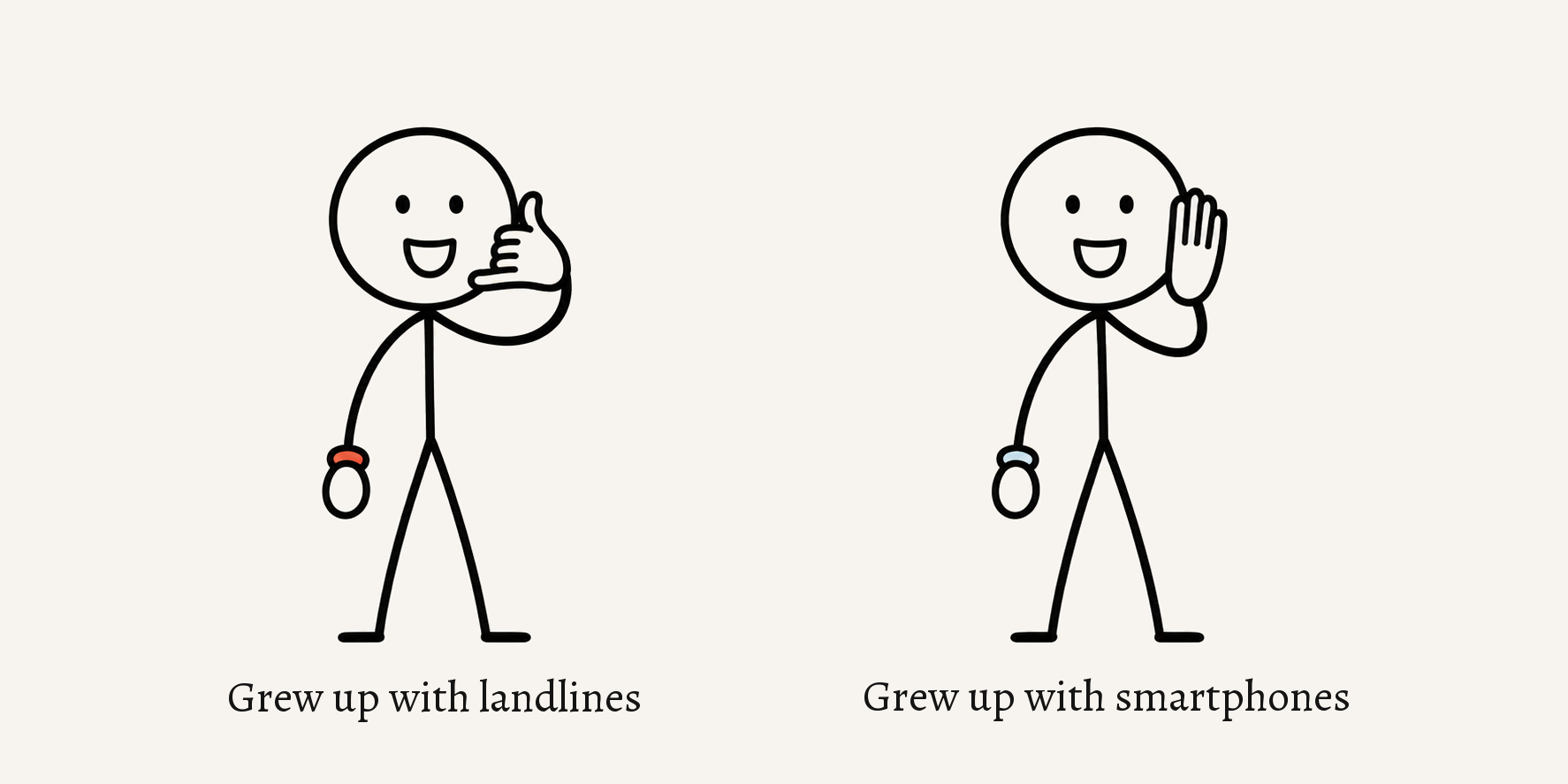
I find this more interesting than saying older people don't get new technology. Someone who makes the handset gesture may be perfectly good with a smartphone. There was simply no need to relearn the gesture as well. People understand it, so it stays.
Gamers have their own version. Dota 2 still has a setting called Legacy Keys, which brings back the hotkeys of the original DotA, a Warcraft III map where each spell sat on a different letter of the keyboard. Plenty of old players still turn it on, and some wear it like a medal. It does show how long they've been playing. It doesn't make them any faster; most players find the standard layout, with the main spells on Q, W, E, and R, the quicker one.
The period at the end of a text message is similar. Some people feel a finished sentence ought to end with one, to be proper. Some younger people can read irritation into that same dot and decide you've run out of patience. One study found that text messages ending with a period were rated as less sincere. One side is being polite, the other feels a chill, and both are baffled.
We still make the small fixes ourselves
With AI, the accent shows up in the things we were trained to be good at. When two words in a draft feel off, I know AI could fix them for me, and I still reach in and change them myself. As a designer, when something sits a few pixels off, I'd rather nudge it by hand than describe it. Programmers were the same, especially in the early days: They couldn't keep their hands off the code. Sometimes that's only sensible, because explaining a tiny fix can cost more than making it. But I suspect someone who really grew up with AI wouldn't feel the itch at all. They'd be more like a boss who has never written code or opened a design tool: Doing it by hand simply isn't on the list.
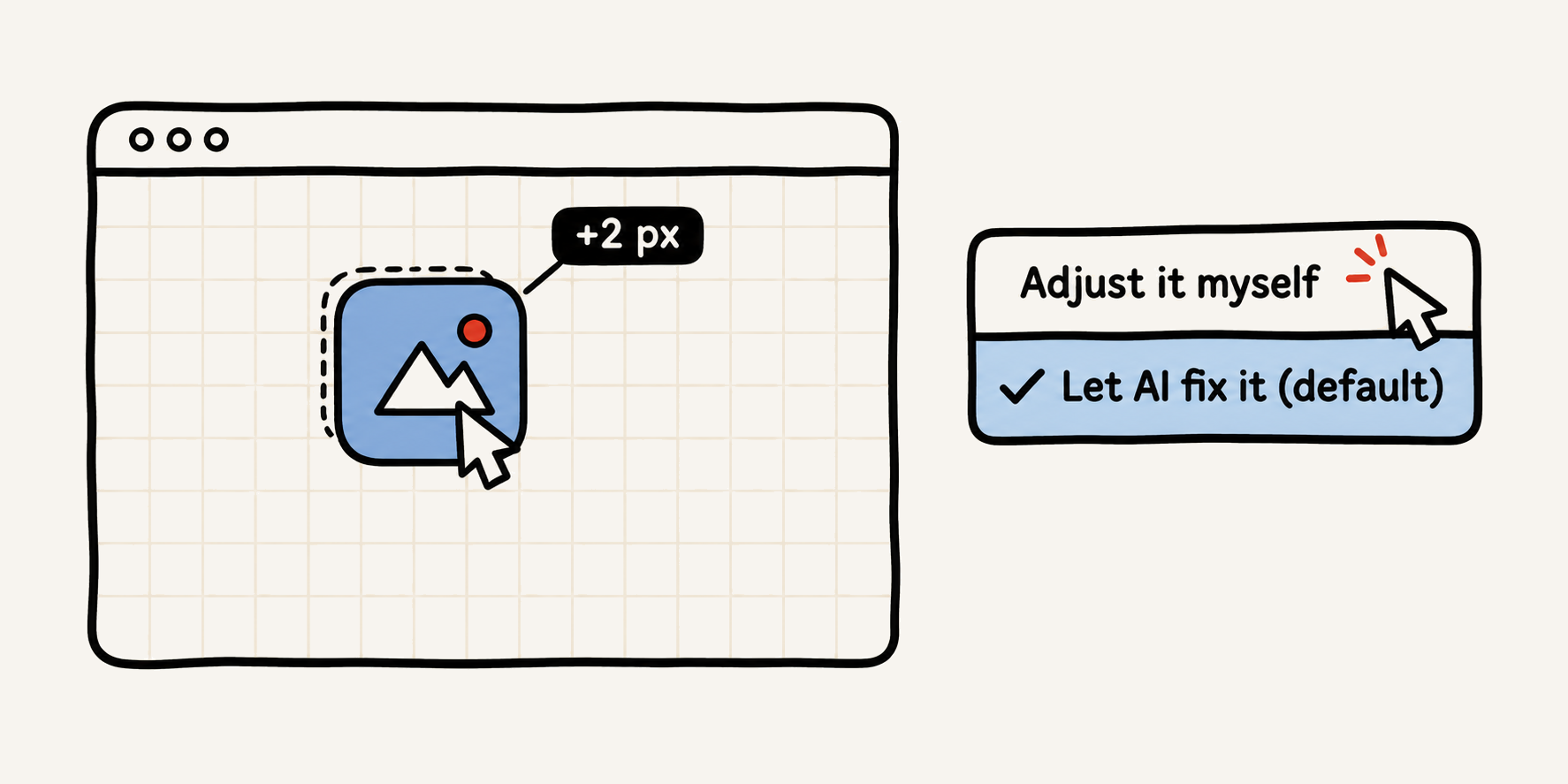
Some of these habits really do have to go. If every small fix still passes through my own hands, I'll never find out what the tools can do. But some old habits are worth keeping. When I see a good-looking image, I still want to ask what makes it good. When I read a paragraph that sounds right, I still want to check whether it is.
Some accents are worth keeping
In my piece on the AI look, I wrote about Chinese text in which every word is right and the whole still reads wrong, because the skeleton underneath is English. It's similar here. What you bring with you can make new sentences come out awkward, and it can also help you hear when something is off.
Even having one more language isn't all bad. In one set of experiments, people making choices in a foreign language were less swayed by how the question was framed. That doesn't mean a foreign language makes anyone more rational. It just reminds me that a little awkwardness sometimes makes you stop and think.
Haruki Murakami has told how he found his voice this way. Unhappy with what he had written of his first novel, he put the Japanese draft aside and wrote the opening chapter in English, in the short, plain sentences that were all his English allowed. Then he “transplanted” it back into Japanese, and the style that came out became his own. If the limits of my language are the limits of my world, a second language moves those limits a little. I count that among the benefits of being an immigrant.
So I no longer ask how to get rid of my accent. I ask which parts of it only cost me time, and which parts are still doing a job. The urge to fix every small thing by hand can go, a bit at a time. The urge to ask why a good image is good should stay.
5But founders are never natives
So far this has been about what we can never be. This part is about what immigrants like us have managed to achieve in the end. Before I get to it, I should name a few people who have said some of this already. In 2024, an interview with the same Marc Prensky, who coined digital native in the first place, ran under the title Digital Natives Are Now AI Immigrants. Demis Hassabis, who runs Google DeepMind, told students at Stanford that “you're the first generation that will be AI native, just like my generation was computer and internet native.” Sam Altman has said that his own children will grow up to be far more capable than we are, and that “they'll be really good at using AI.” And Jayshree Seth, a scientist at 3M, has written that “when it comes to generative AI, we are all immigrants,” and that immigrants may know exactly what to do.
So the part about all of us being immigrants has already been said. Seth writes about the resilience immigrants bring. The steps I want to add are the experience behind the accent, the orthodoxy that doesn't exist, and one thing that matters more: The rules of a new place are very often set by the people who came from the old one.
Whose subjects were the founders?
American history is full of such people. We read history country by country, so it's easy to tie a person to the country he founded, as if he had belonged to it since childhood.
But George Washington spent his early twenties as an officer on the British side, fighting the French. And after independence, American courts went on using English common law. A new flag doesn't mean everyone's way of doing things starts again from zero.
Even the names carried over. Georgia was named for King George II, and New York for the Duke of York. The country on the map was new, but the names on it were not.
First the founders, then the natives
John Adams is the clearest example I know. In December 1765, more than ten years before independence, Adams argued against the Stamp Act before the governor and council of Massachusetts. According to the notes taken that day, he called it “utterly void,” because it was “against our Rights as Men, and our Priviledges as Englishmen.”
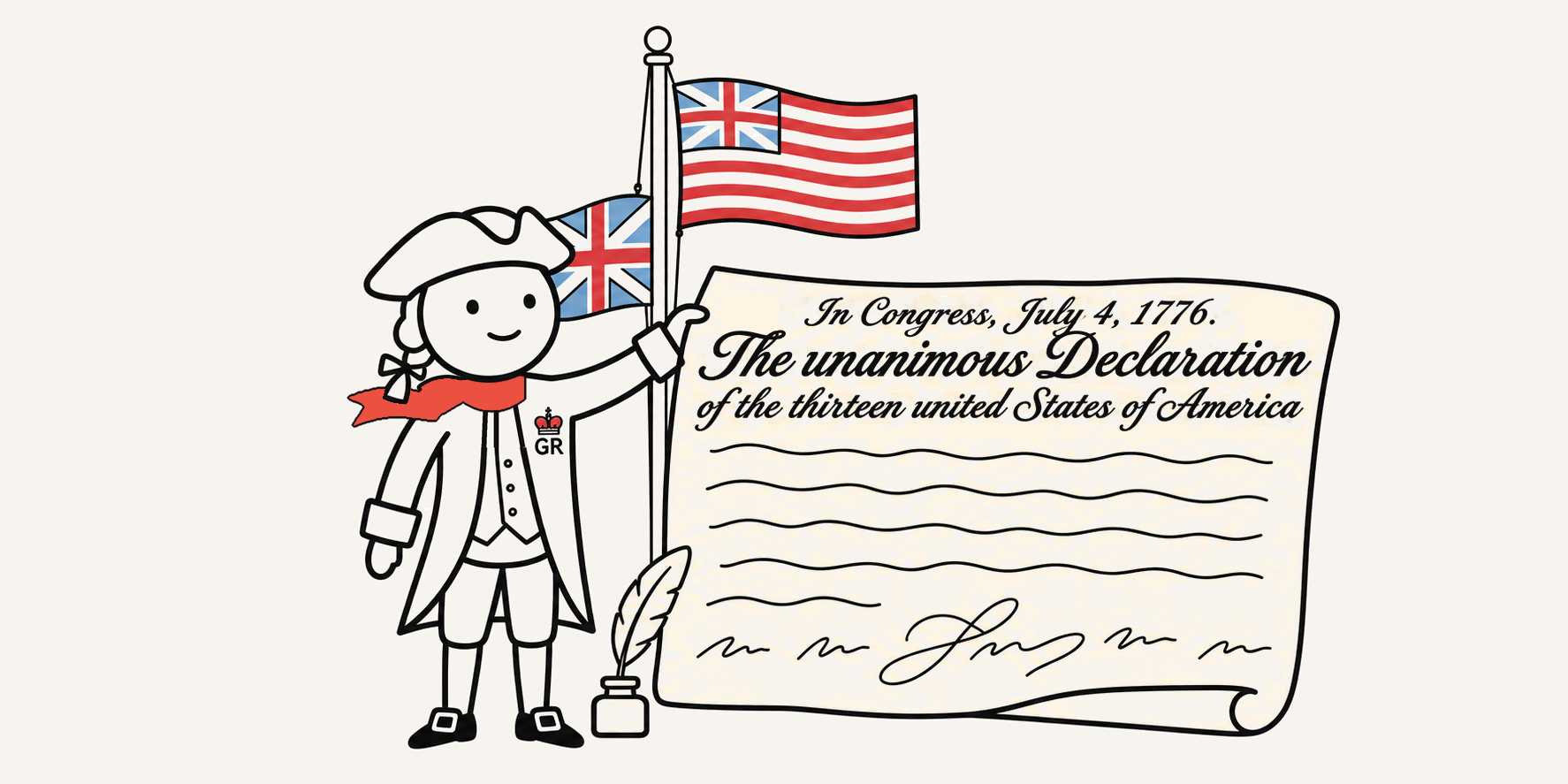
In a history book, a new chapter begins in 1776. But Adams was not born a second time at the chapter break. What he carried across was a training in English law and an Englishman's idea of his rights. What he knew how to argue yesterday did not vanish the day the country got a new name.
Looking back, it's easy to call him a founder of the United States. But move the clock back a little and ask which country he belonged to, and the answer is Britain. The days he was living through didn't yet have the clean dividing line the history books draw.
Someone has to found the United States before anyone can be born American. Waiting for a native-born American to do it would be like being told you need a driver's licence before you can take the driving test.
Benjamin Franklin is another. He was seventy when he signed the Declaration of Independence in 1776, which means he had lived seventy years as a British subject, some of them in London. We think of him as American because we look back from what he did later. But most of what he had seen and lived through came from the old world.
Other countries and new ideas began the same way
Chinese history has the same pattern at almost every turn: The founders of the Han, Tang, Song, and Ming dynasties had all been subjects of the dynasty they replaced, and three of the four served it. A Chinese throne didn't simply pass down a family line the way a European crown did; each new dynasty started over under a new name, and its founder might be the old emperor's cousin or a former beggar monk.
It isn't only a matter of who came first, either. George Orwell wrote in 1945 that one “quite commonly finds that great national leaders, or the founders of nationalist movements, do not even belong to the country they have glorified,” and one of his examples was Napoleon, a Corsican.
It holds for ideas too. Plato's dialogues are the earliest works of Western philosophy to survive whole, and in one of them he has his teacher Socrates argue that writing will make people forgetful. Édouard Manet, the painter the Impressionists looked up to, never showed at any of their exhibitions and kept sending his canvases to the official Salon. Confucius, whom Chinese tradition has looked back to for two and a half thousand years, called himself “a transmitter and not a maker”; what he wanted was to bring back the ways of the early Zhou kings, some five hundred years before his time. Each of them belonged to the world before the one he helped start.
The line between old and new only shows from far away
This is easy to miss because we all learn history from a distance. In a textbook, one era ends and the next begins when you turn the page, and the people on either side look like different kinds of people. But the people living through it got one ordinary day after another, and no one told them on any particular day that the page had turned. A caterpillar at least gets a cocoon when it changes; most changes come with no such clear break. Biologists have a word for evolution by sudden leaps, saltation, and it is the exception, not the rule. It's the same with a colleague you see every day. You never notice them changing, and then you come across a photo from a year ago and get a jolt. The evolutionary biologist Richard Dawkins gives an example that stretches the time much further. Start with a photo of yourself, add one of your father, then one of his father, and keep going back for 185 million generations. The last photo in the pile is a fish. You are obviously not a fish, yet no two neighbouring photos in that long pile look any different.
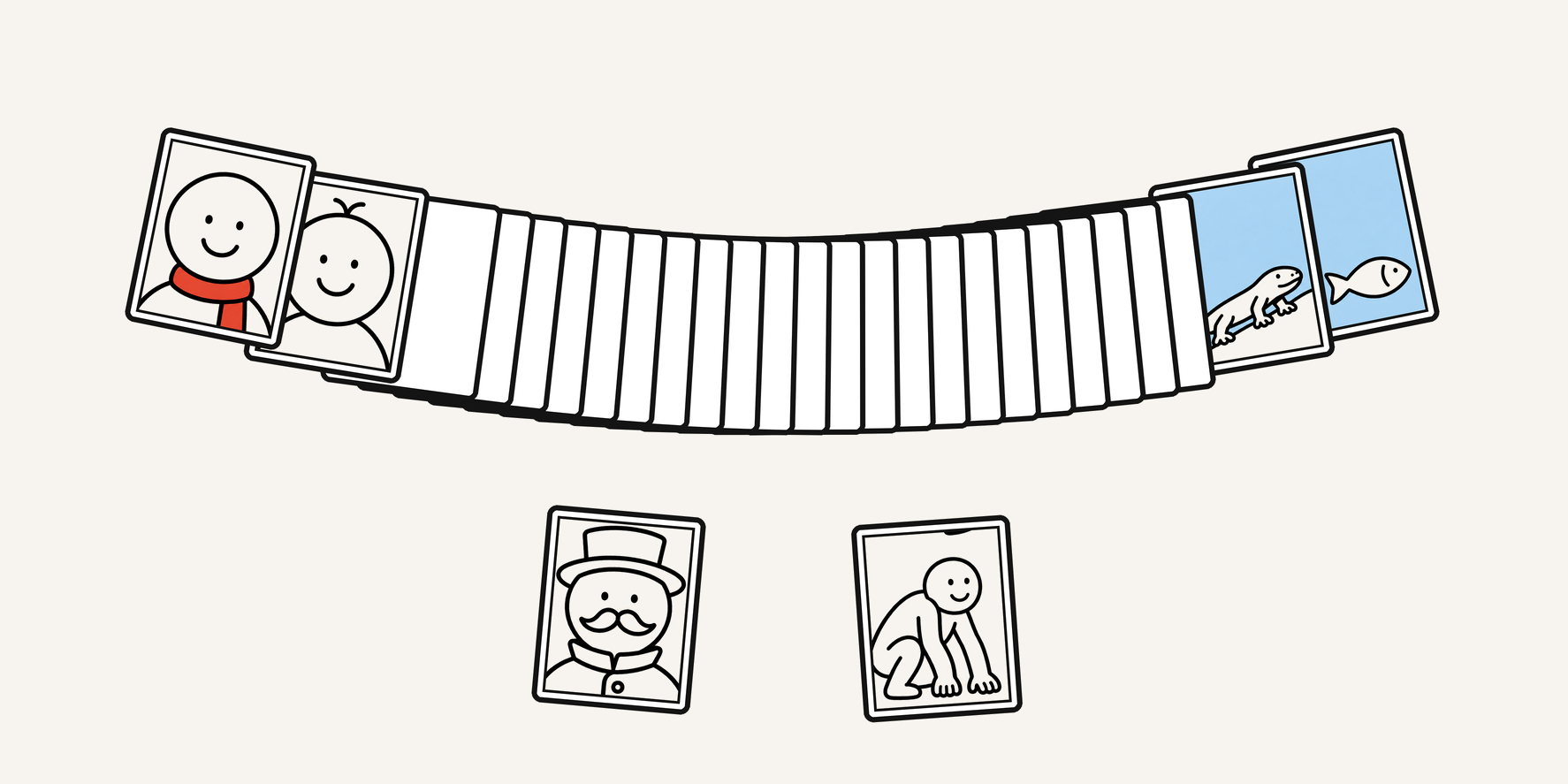
I'm not trying to make a revolution sound like a light thing, or to borrow a founder's glory for today's office work. Many real countries weren't founded on empty land, either, and the people already living there paid for it; the land of AI, at least, had nobody in it before us. The comparison is useful only in a narrow way, but it is clear: Being born in the old world doesn't stop anyone from helping to build the new one. Old experience can hold a person back, and it can also be exactly what tells them which parts need changing.
AI's rules can't wait for the natives to grow up
Back to AI. Many of the rules haven't been settled yet. A few of the big ones are being drafted in public; Anthropic has even published a constitution for its AI, Claude. Most of the everyday ones, though, nobody has written yet. Take a piece of design work: At what point does AI's output go to a person to look at? What counts as finished, and what has to be redone? When a result looks great, who decides whether it can actually be used?
None of this will wait until the real natives grow up. There is work due today, and when something goes wrong, someone has to deal with it today. How we do things each time, and how we teach others once it runs smoothly, is slowly turning into the rules.
Before changing how you work, ask why each step was there
This is where old experience earns its keep. If you know why a step existed in the old process, you can ask one more question: Now that the tools have changed, does this step still belong? Some steps were only there because there used to be no other way, and today they can go. Others look useless but are part of a larger safety net, and you can't judge them by the few minutes they cost.
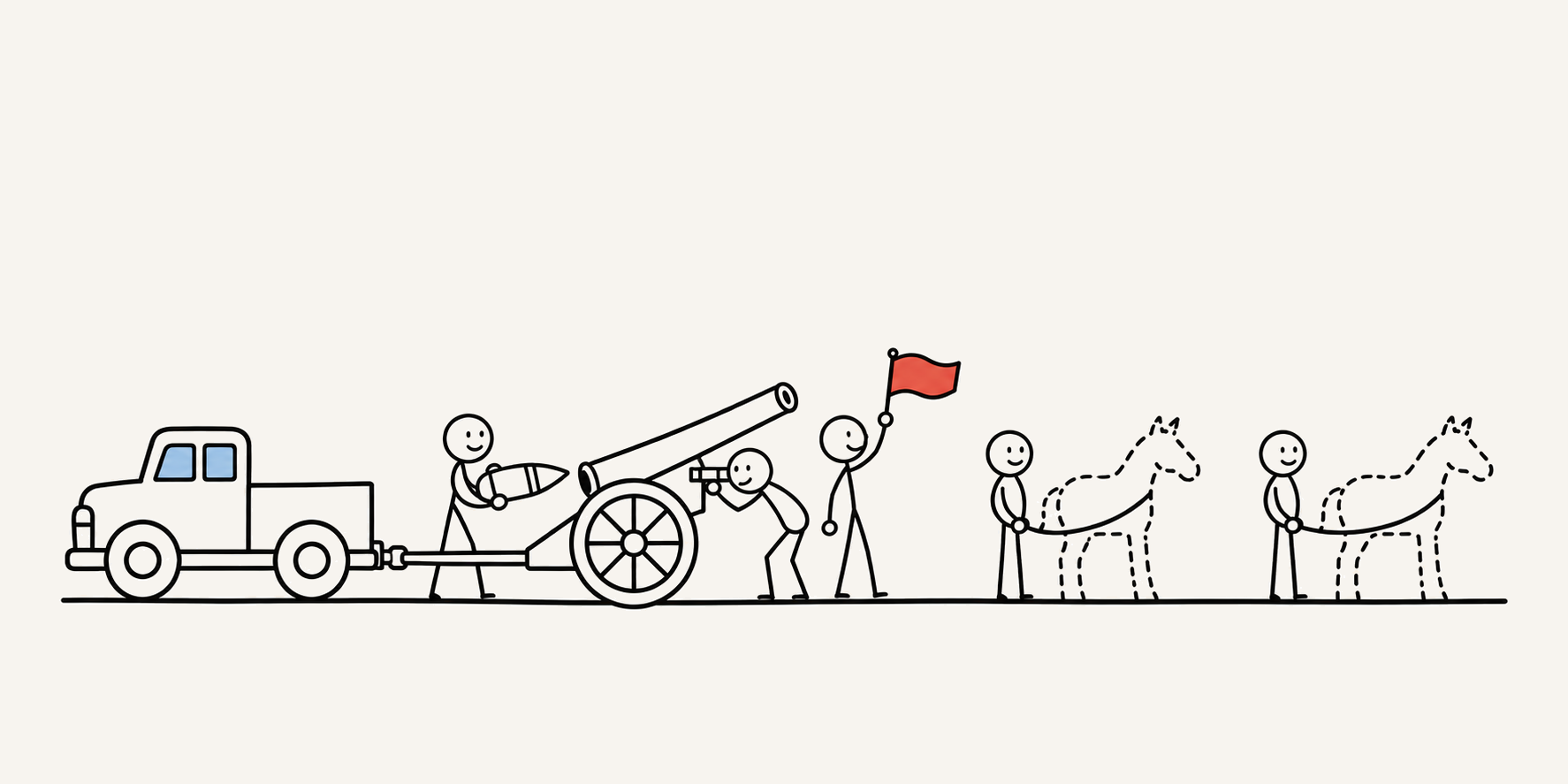
The historian Elting Morison passed on a story about this, and was careful to say it was only what he had been told. Early in the Second World War, the British were using old field guns hitched to trucks, and they brought in a time-and-motion expert to speed up the firing. In slow-motion film of a five-man crew, the expert noticed that a moment before each shot, two of the men stopped and stood at attention for three seconds. He showed the film to an old artillery colonel, who was puzzled as well and asked to see it again. “Ah, I have it,” the colonel said. “They are holding the horses.”
The horses had been gone for years. Nobody had written them out of the drill, and it took someone who remembered the horses to see what the two men were doing.
Immigrants can write the rules too
If all I think about is adapting, I'll probably decide that whatever everyone else does, I should hurry up and copy. But if I think of myself as someone who also has to set rules, I have to spell out my reasons. Why does this part go to AI, while that part still needs my eyes? When someone else follows the rule and runs into an exception, what should they do?
You don't need to be in charge of anything first, and you don't need to call your workflow a constitution; my laptop can do without a powdered wig. Thinking one recurring task through and leaving a method that someone else can pick up is already a start. Of course, a written rule can be wrong. Letting others point that out, and being able to change it, is worth more than stamping it official on day one.
So here is the step I wanted to add to “we are all immigrants.” Immigrants do more than make a life in a new place. They can also help decide how life there works, and they don't have to lose the accent first.
6How to settle: See yourself as a founder
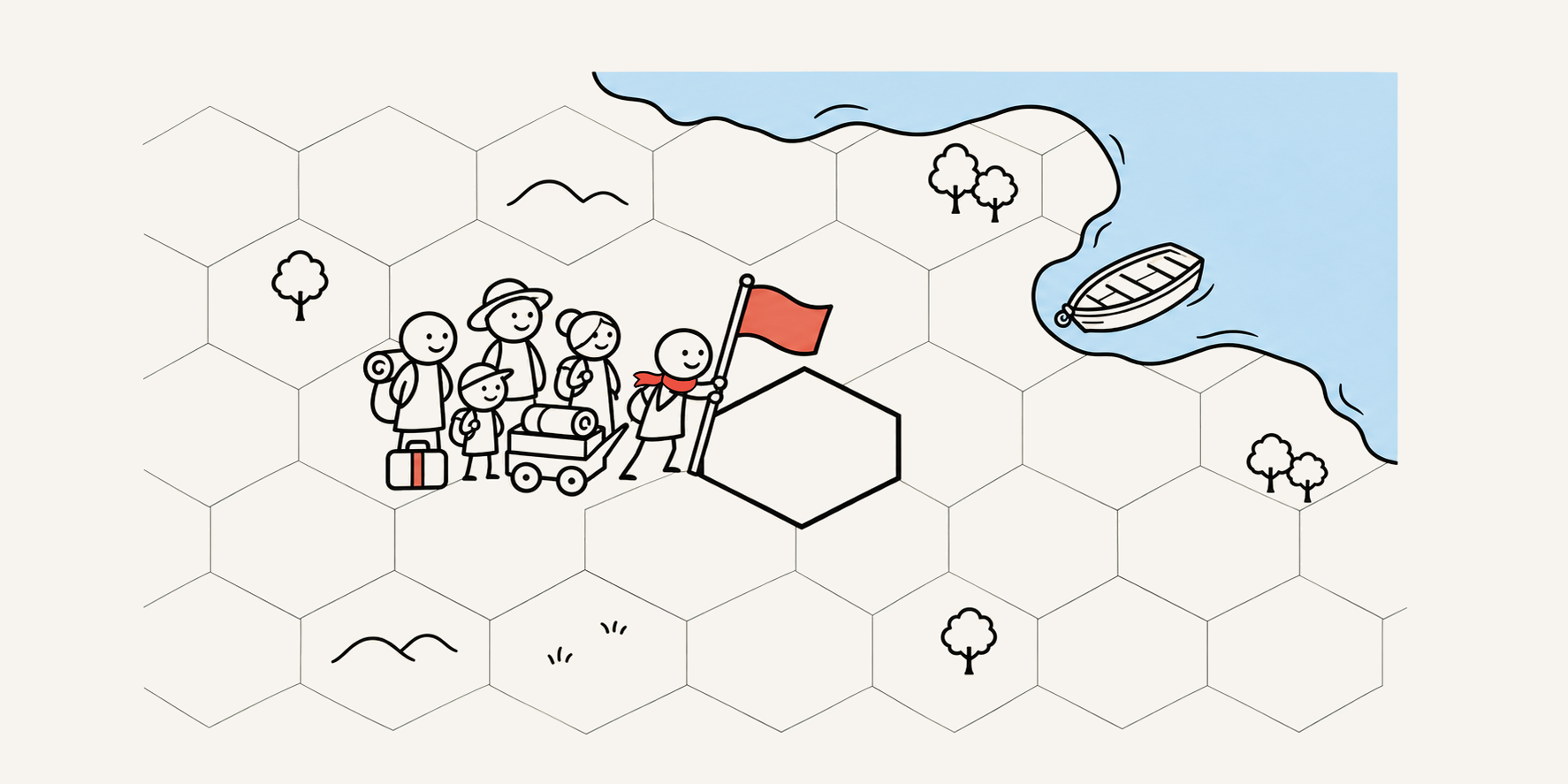
So what can we actually do? Before asking how many hours a day to spend with AI, I'd ask myself one thing first: Do I actually plan to make a life here?
Stop planning the triumphant return
We love a certain kind of hero story. You leave, you make something of yourself, and you come home the conquering hero, so everyone can see. The mythologist Joseph Campbell's hero's journey ends with a return, too. We know that ending so well that before we've even left home, or started the company, we're already planning the triumphant return.
But an ordinary life doesn't have to follow that plot. If you keep treating where you are as a temporary stop and save real life for after you go back, it's hard to arrange your life here with any care. The other choice is to put down roots, to bloom where you are planted. I find the idea very down to earth: The place where you settle can slowly grow roots, too.
Playing it safe has a price
Among Chinese professionals in North America, a common question is why our Indian colleagues seem to find their footing at work more easily than we do. My own impression is that many Indian professionals never planned a triumphant return in the first place. Research offers a related explanation: A 2020 study found that East Asians reach leadership positions less often than South Asians, and that lower assertiveness consistently accounted for the gap.
The longer I think about it, the less it looks like a lack of nerve to me. I suspect a lot of people who grew up the way I did never even think of speaking up, because we were taught to guard against whatever might go wrong and to keep a way back open. Most of the time that is good sense. But playing it safe also means never getting your hands dirty. You end up watching from the sidelines, and work that needs everything you have doesn't get it. I'm not telling anyone to be reckless. I only mean that if you want something to work here, at some point you have to go all in and stop planning the retreat.
When I left, I wasn't planning a triumphant return either. That doesn't mean I'd refuse to go back if things didn't work out. Going back is always an option; it just isn't what I plan around while I'm working here. I'm more like a herder following water and grass: Wherever they are, that's where I set up a life. I think people who start businesses are much the same. Nobody sensible assumes success on day one, but the ones who get there tend to do it one solid step at a time, and they set out determined to see it through. Without that, it's hard to be ambitious about anything, or to give it everything you have.
Four ways to be here without being born here
And if I'm not planning around going back, I think there's a better way to see myself than as a permanent immigrant, or as someone hoping to be taken for a native one day: as a founder, or at the very least as one of the people building the place I now live in. If founder feels too big, builder or architect will do; the AI world already uses both.
People who aren't natives aren't all the same kind of person, either. Two questions sort them: Are you planning to stay? And do you live by the rules you find here, or do you make some?
| Lives by the rules already here | Makes rules | |
|---|---|---|
| Passing through | Visitortourist, guest, sojournerbard, pilgrim | Scoutexplorer, tinkerer, pathfindertravelling merchant, caravan |
| Here to stay | Immigrantnewcomer, resident, neighbourhomesteader, artisan | Founderbuilder, architect, pirate, entrepreneurlawgiver, city-builder |
Whether you were born here isn't one of the chart's axes, because it's the one thing nobody can change. Everything on the chart can be changed. Visitors look around. Scouts try things and move on. Immigrants stay. Founders stay and build. I've been the first and the third, and the next move, from staying to building, is what the rest of this essay is about.
7Where to start: From visitor to founder, one step at a time
A founder, after all, is an entrepreneur taken to the limit, someone whose business happens to be a whole country. Bring it down to the size of one person and the mindset is the same. You don't wait for someone to arrange the role and the rules for you; you look for where AI could earn you an extra income. Taking on a bit of work outside your job counts, and so does taking on one more thing inside it and agreeing on a price.
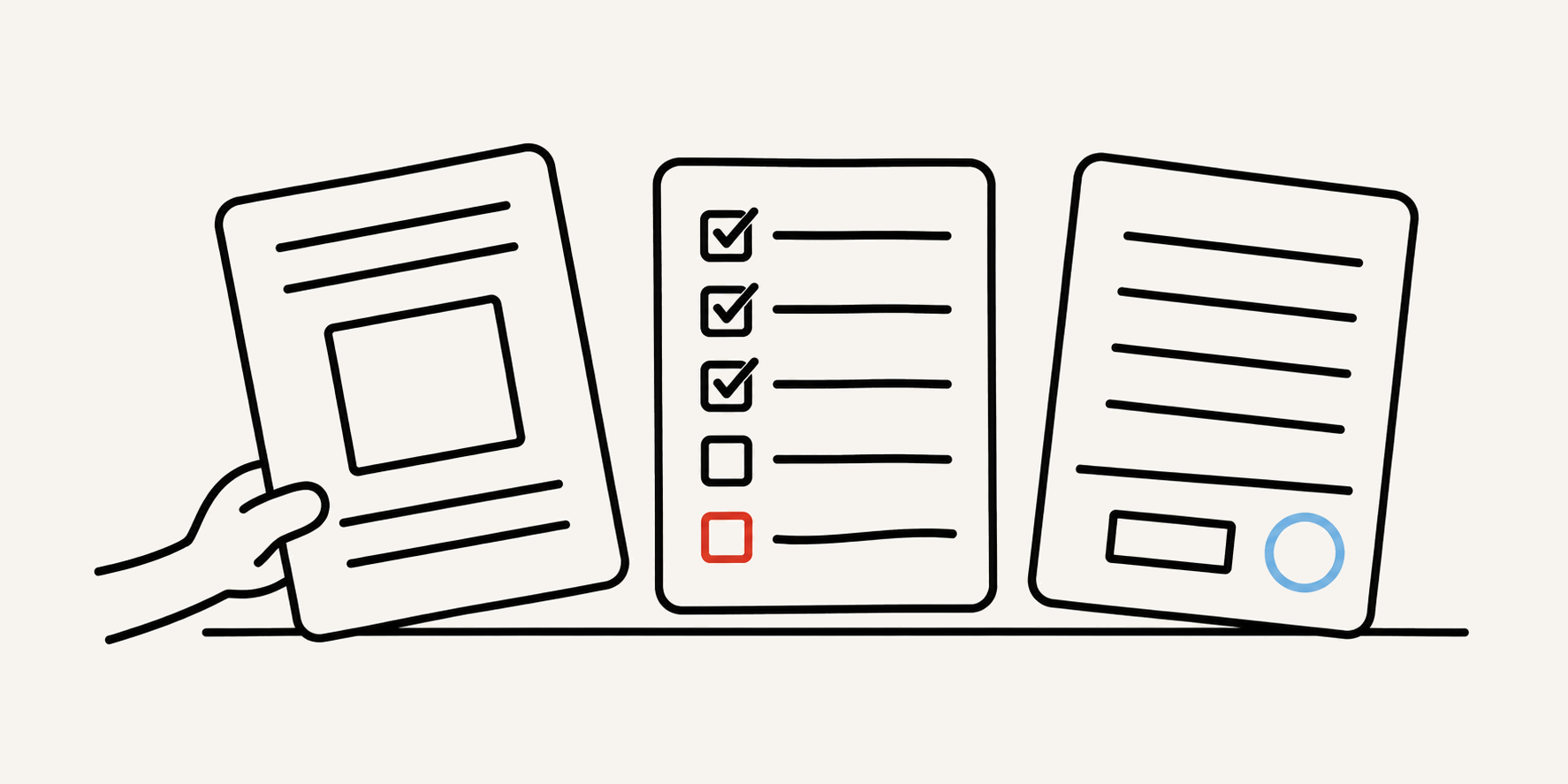
How do you get there from wherever you are now? The advice from people who have done it, and from people who study how AI is used at work, comes down to roughly three steps, one for each move on the chart. I have put my own experience in where it fits; the part I haven't reached yet, I'll leave to them.
Step 1: Use AI on the work you actually do, not just for practice
If you're still in the visitor box on the chart, AI is probably something you ask a question now and then. The Wharton professor Ethan Mollick puts it as the first rule in Co-Intelligence, his book on working with AI: “Always invite AI to the table.” Try it on the work you actually do, every day, and see where it helps and where it doesn't. His last rule is worth keeping in mind too: “Assume this is the worst AI you will ever use.” I stayed at this stage for a long time. I tried putting AI to work from the start, but it couldn't edit my slides, documents, or spreadsheets, so most of my effort went into writing prompts. Only when it could make the changes itself did it become part of my real work.
Step 2: Turn what you keep correcting AI on into rules
By the time you're in the immigrant box, AI is a tool you use every day. This is the step I know best, and Davin Dong, the founder of Cookiy AI, made the same point in a Superlinear Academy masterclass (link in Chinese): Each time you correct the AI, write the correction down as a rule it reads before it starts. Keep the rules short, and keep the file short too, so that it actually gets read. The next part is my own, pieced together from what others have said and what I've done: When the same mistake comes back anyway, stop adding words and add a check that runs on its own. The surgeon Atul Gawande, who led the work on the World Health Organization's surgical safety checklist, wrote in The Checklist Manifesto: “Under conditions of complexity, not only are checklists a help, they are required for success.” Mollick's second rule says the same from the other side: “Be the human in the loop.” Mine have grown to about forty in a few months, but one is enough to start: AI can draft the web page, but before it goes out, the fonts and links get checked one by one.
Step 3: Take on one small paid job and deliver it from start to finish
This is how you move toward the founder box, by using AI to make something people will pay for. Keep the scope small, so that afterwards you can tell whether AI really saved you effort. Sahil Lavingia, who founded the creator platform Gumroad, gives people starting out much the same advice in The Minimalist Entrepreneur: Build as little as possible, and sell it to your first hundred customers. When you talk about the job or the price, describe your new skill as something you deliver. Say which extra part you can take on, how it will be checked, and which problems are yours to handle. The software engineer Patrick McKenzie put it bluntly in career advice that has been passed around since 2011: “Engineers are hired to create business value, not to program things.” Swap in designers and AI, and it still holds. I haven't got this far myself yet; it's the next box on my own chart.
Once these three are done, I expect to be using AI more anyway. That order seems right to me. Using it a lot is a by-product, not the goal. Once there's something you want to get done here, you know what you need to learn. Running up the hours doesn't prove you've actually moved in.
8What we leave for the real natives
The “real” AI natives may be in primary school right now, or not yet born. By the time they grow up, they'll probably find it hard to understand why we ever treated “should I use AI?” as a question worth discussing.
It's like seeing someone print out an email today; your first reaction is probably, really? But when those kids start working, some of the rules that feel completely natural to them may turn out to have been left behind by this crowd with accents, who were trying things out as they went.
What we can leave them is about that much: some rules and some scaffolding. Those who come after us will keep what works and tear down what doesn't. Deciding everything for them in advance wouldn't be realistic anyway; the mainland is still drifting.
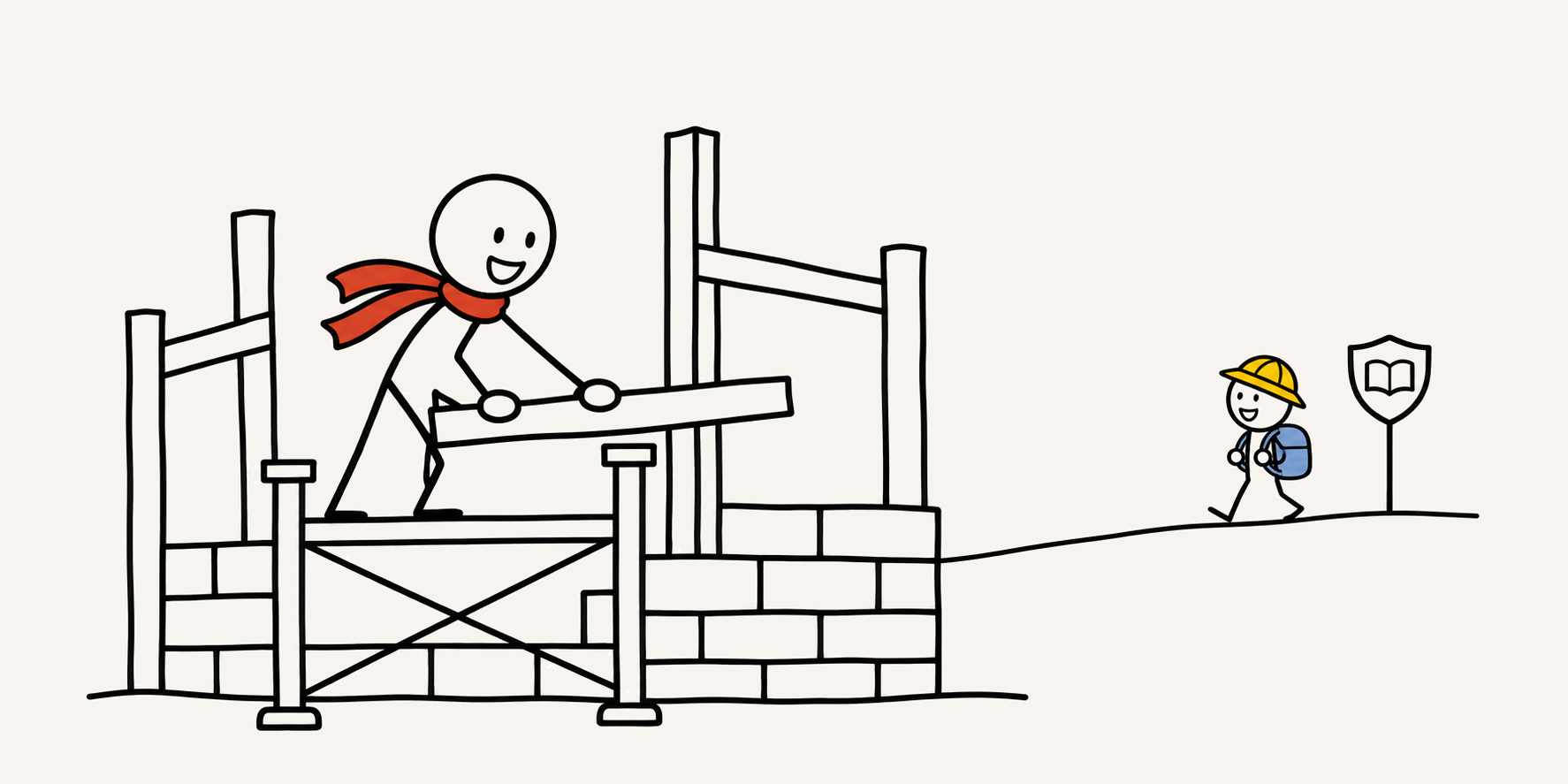
Prensky made the immigrant comparison more than twenty years ago. What I wanted to add is the second half: what life looks like after you arrive.
Immigrant is still the most accurate word I have for people like us. But being a founder is the best way I know for us to deal with the present, and with what comes next. It sounds a little grand, I admit. But as I said earlier, there is no settled, widely accepted name for people like us yet, and names like this may only settle once the dust has. When that day comes, I'll quietly add the name to my rules, and I hope I won't be the one complaining that it sounds wrong. In the meantime, I'll go write down my next rule.